
What a dopamine menu solves
ADHD procrastination is often a motivation-regulation problem, not an information problem. A dopamine menu helps by pre-deciding healthy rewards and regulation actions before friction appears.
When the plan is preloaded, you spend less energy negotiating with yourself mid-session.
Build your menu in three layers
- Starters (before focus): one song, two-minute walk, quick stretch, tea prep.
- Stabilizers (during breaks): hydration, breathing reset, sunlight, 10 squats.
- Finishers (after session chain): favorite snack, short episode, social check-in, game round.
Keep rewards short and bounded. The point is to restore momentum, not to replace the study block with a longer distraction.
Dopamine menu + Pomodoro pairing
Attach one small starter to the first 25-minute session. Use stabilizers in each 5-minute break. Unlock one finisher only after the full chain is complete. This creates a clear effort-reward arc your brain can trust.
Common mistakes to avoid
- No boundaries: open-ended rewards can derail the whole schedule.
- Too much novelty: change only one variable at a time.
- No tracking: without data, you cannot tell what actually helps.
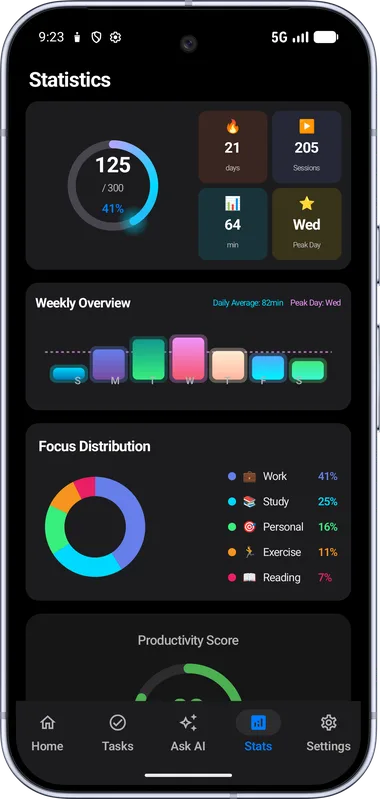
Use FocusFlow session stats to review what reward combinations correlate with your strongest streak days. Then keep only what produces consistent completion.
Try FocusFlow free on Android
Use the Lantern Journey timer, Flow AI Coach, and ad-free focus sounds in your next study session.

FAQ
What is a dopamine menu for ADHD?
A dopamine menu is a list of healthy, low-friction rewards and regulation tools you can use before, during, and after work sessions.
Can a dopamine menu reduce procrastination?
Yes. It lowers emotional friction by giving your brain a clear reward structure around difficult tasks.
How do I use a dopamine menu with Pomodoro?
Attach small rewards to each focus block and a larger reward to completed session chains. This makes consistency more likely over time.